Public Domain Day, celebrated on January 1st of every calendar year, marks the moment when works that were once copyrighted become free to be used and reused by all. In celebration of this year’s Public Domain Day, we published this blog post highlighting films, albums, and movies released in 1976 that will enter the public domain this year.
But here is where things get interesting. Not everything about those 1976 albums is quite as free as it might seem.
You might be wondering, “Can I really use these albums however I want?” The answer lies in understanding the nuances of copyright, which could save you from legal headaches down the line.
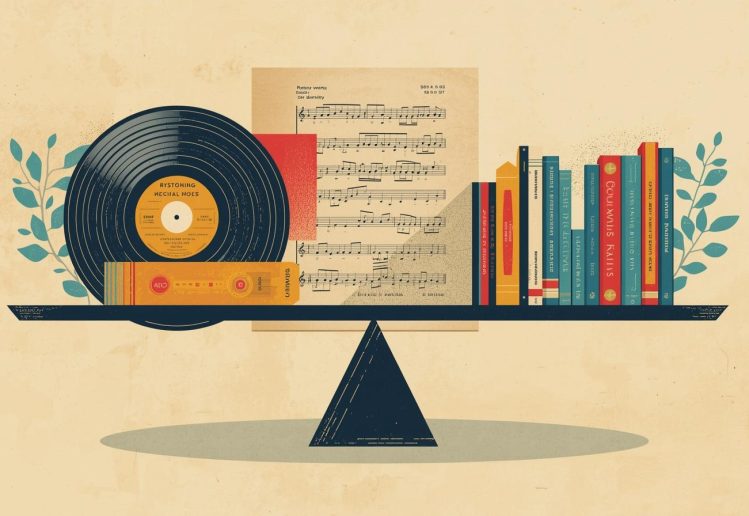
Here is an interesting truth. When you listen to an album, you are experiencing two distinct copyrighted works at once. Think of it this way. When Ebenezer Ober composed the melodies for ‘Operation Feed the Nation’, he created a musical work that includes the notes, the lyrics, and the composition itself. But then, when the band stepped into the studio to record this incredible sound and capture the music on tape, they created a sound recording that is limited to that specific performance. So, on that day, two creative works were released. The musical work and the sound recording
The Nigerian Copyright Act of 2022 treats these two creative works very differently, and that distinction is important to note.
Looking into the Nigerian Copyright Act
In the Nigerian Copyright Act of 2022, Section 19(1)(a) states that the copyright of a musical work lasts
“Seventy years after the end of the year in which the author dies.”
That’s a long time. Potentially stretching well into the 22nd century for music created in 1976.
But for sound recordings, Section 19(1)(d) offers a different timeline
“Fifty years after the end of the year in which the recording was first made available to the public with the consent of the author or fifty years after the work was created, if not made available to the public within that time.”
So, when we celebrate those 1976 albums entering the public domain on January 1, 2026, we’re specifically talking about the sound recordings. The specific performances that were captured five decades ago.
What you can do thanks to the Sound Recording being in the Public Domain
You can freely use the actual 1976 recordings themselves.
You can play Fela Kuti’s “Yellow Fever” at your event. You can include clips from Etubom Rex Williams “Message to the World” in a documentary. Think of it as remastering and redistributing these historic recordings.
You can sample these recordings in new works, use them in films or podcasts, archive and preserve these recordings digitally, and share the recordings freely without permission.
What you cannot do because the Musical Work remains Protected
With the freedom that comes from these sound recordings being in the public domain, there are still limitations to how you can use them because the underlying musical works, including the composition, the melodies and the lyrics, remain copyrighted for seventy years after the death of the composer.
This means that you cannot record your own cover of these songs without permission from the rights holders. You cannot publish the sheet music or lyrics without authorisation. You cannot create new arrangements or adaptations of these compositions.
The Practical Reality
There are questions about who holds these rights today, as some of these albums might involve multiple composers. Copyright can be transferred, inherited, sold, or licensed. Just because a composer created a work in 1976 doesn’t mean they or their estate still control it. Record labels, publishing companies, or other entities might hold various rights, making the landscape even more complex.
While the law provides clarity on paper, enforcement and interpretation can vary. If you plan to use these works commercially, it’s best to consult a copyright attorney familiar with Nigerian law.
The distinction between sound recordings and musical works reflects creativity building upon creativity. The composer who writes a song and the musicians who perform it are both creators, both artists, both deserving of recognition and protection for their contributions.
The Nigerian Copyright Law attempts to balance several competing interests by protecting both elements of the creative work and rewarding creators for their efforts, ensuring their families can benefit from their legacy, and ultimately allowing these cultural treasures to become part of our shared heritage.
Two key things to note:
- When in doubt: Seek permission or legal advice. The cost of getting it wrong can far exceed the cost of doing your homework.
- Give credit: Even when something is in the public domain, acknowledging the creators honours their contribution to our culture.
As these 1976 recordings enter the public domain, they open exciting possibilities. As you explore these newly available sound recordings, whether as a musician, a filmmaker, an archivist, or someone who simply loves Nigerian music, you’re participating in this conversation. You’re helping to keep these cultural treasures alive for another generation.
Just make sure you’re doing it legally, ethically, and with full awareness of what’s truly free and what remains protected.