FKA 2025 Impact
Every year begins quietly.
But for Free Knowledge Africa, January 1st is never just another day. It is Public Domain Day, a reminder that knowledge, once protected by time, returns to the people it belongs to.
And so, we began 2025 exactly where our work is rooted: the Public Domain.
Where the Year Began: Libraries, Memory, and Culture
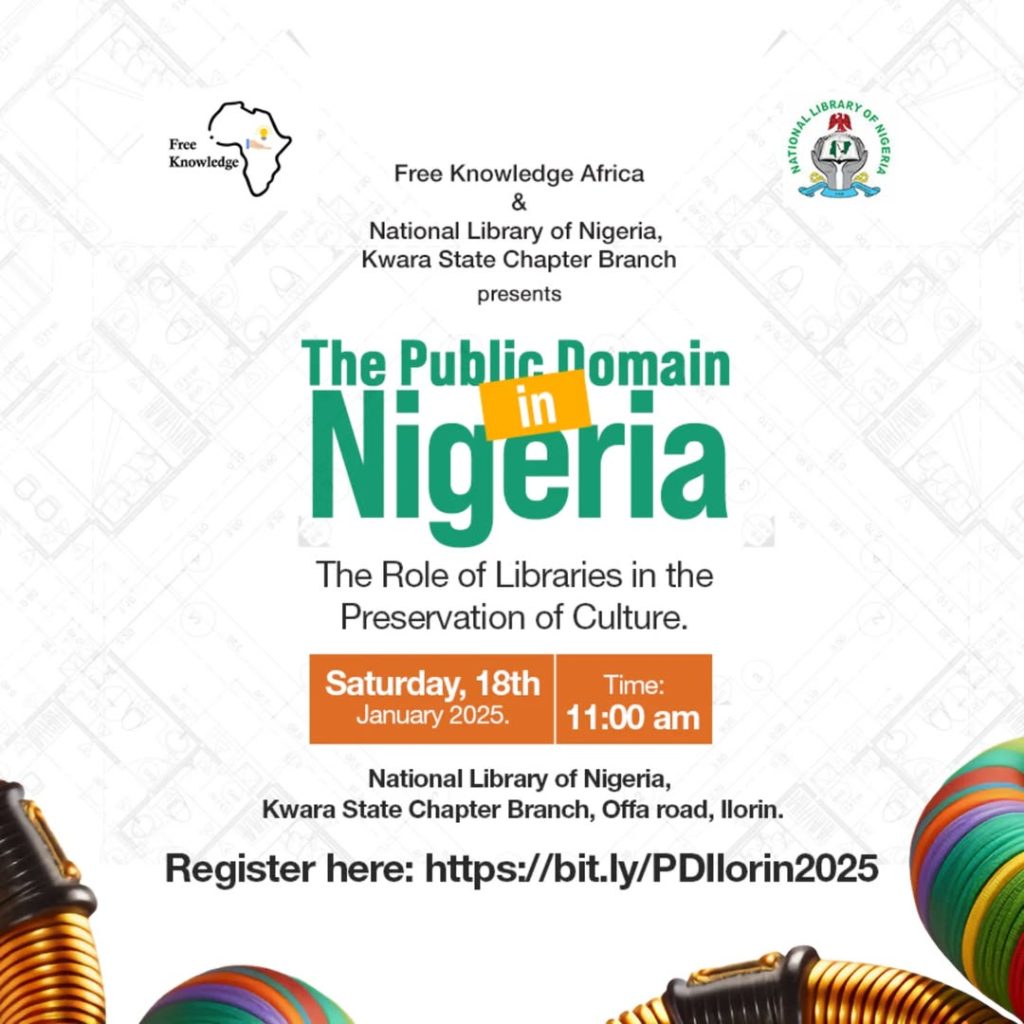
In the first days of the year, we gathered at the National Library of Nigeria, Kwara State Branch, alongside librarians, historians, researchers, students, entrepreneurs, and culture enthusiasts. Together, we asked an important question:
What role do libraries play in preserving Nigeria’s cultural memory in the public domain?
That conversation titled “The Public Domain in Nigeria: The Role of Libraries in the Preservation of Culture” was more than an advocacy event. It was a signal. A reminder that preservation is collective, and that libraries remain central to how stories survive.
Still in January, we took another important step to impact.
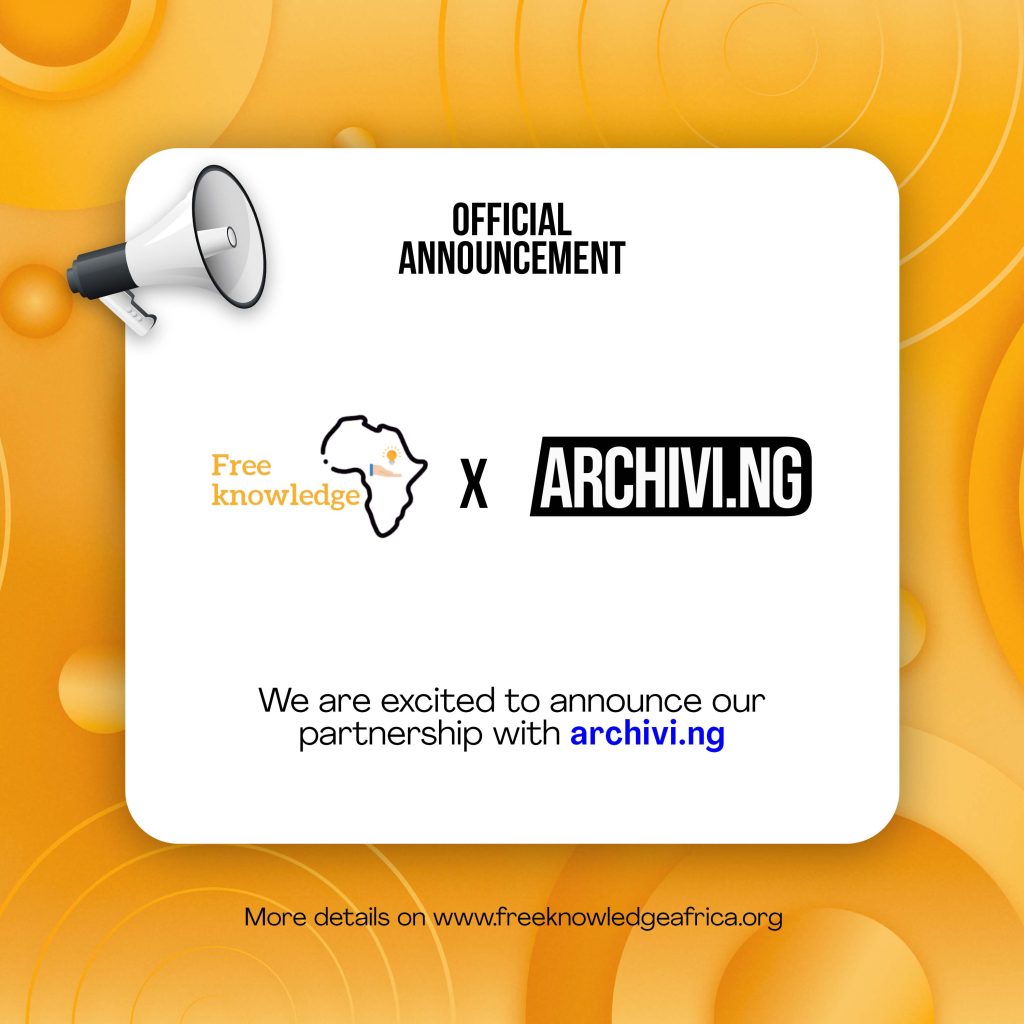
We announced our partnership with Archivi.ng a collaboration grounded in a shared belief that access to history should not be limited by geography, fragility, or gatekeeping.
Through this partnership, Free Knowledge Africa and Archivi.ng are working together to preserve, digitise, and expand public access to Nigeria’s historical archives, particularly newspapers. By making these materials more accessible, we are helping ensure that Nigeria’s rich cultural and historical heritage is available to everyone researchers, students, journalists, and curious minds alike.
This partnership reflects our shared mission: to democratise knowledge and safeguard history for present and future generations.
January didn’t just open the year. It set the tone.
When Education Is Open, Impact Multiplies
In June, we deepened our commitment to open education through the OER Educator Training Program.
Over six intensive weeks, more than 50 educators from Nigeria, Uganda, and the UK came together in a shared virtual classroom. They explored the principles of open education, learned how to create and publish Open Educational Resources, and reimagined how teaching can thrive when access is unrestricted.
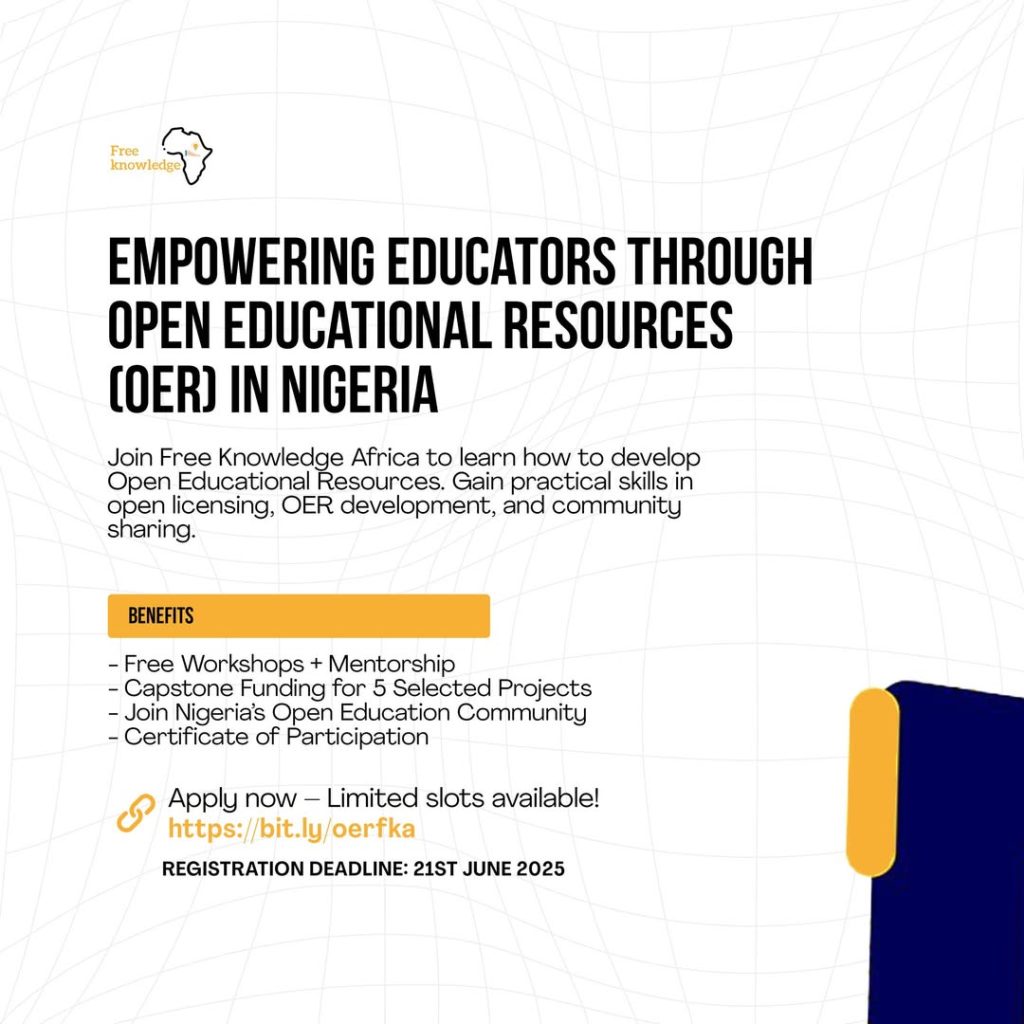
The program culminated in the funding of five outstanding Capstone Projects, practical, creative demonstrations of what happens when educators are empowered with the tools to share knowledge freely.
For us, this wasn’t just training. It was proof that open education scales impact far beyond the classroom.
Building Digital Custodians: The Wikisource Bootcamp
By August, our focus turned toward the future and the people who would carry this work forward.
We launched the Free Knowledge Africa Wikisource Bootcamp, a fully online, three-week program designed to cultivate a new generation of digital custodians for Africa’s rich textual heritage. Students, researchers, creatives, and curious learners joined from different backgrounds, united by a shared desire to preserve knowledge.
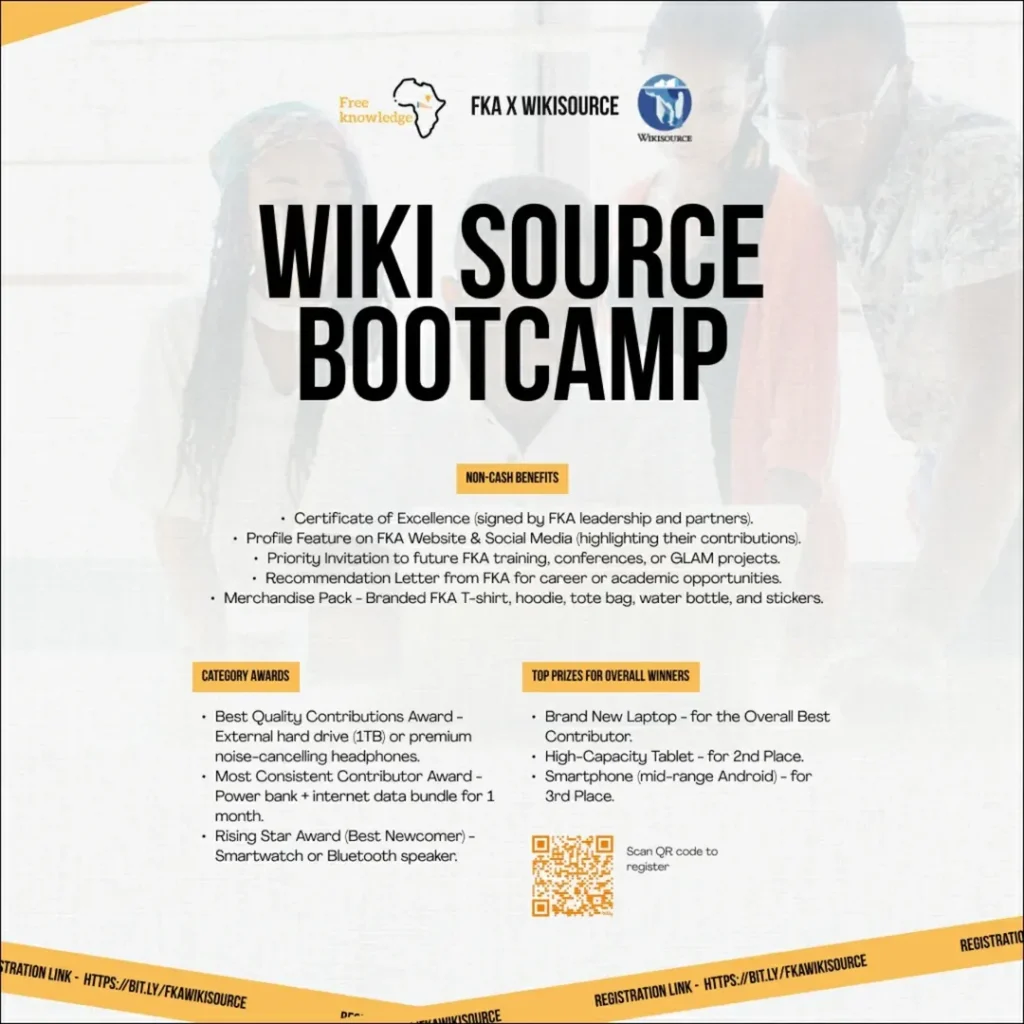
Through interactive workshops, live Q&A sessions, and collaborative contribution sprints, participants didn’t just learn about Wikisource they contributed. They digitized texts, understood sourcing, and experienced firsthand what it means to protect history in digital spaces.
By the end of the bootcamp, preservation was no longer abstract. It was practical. It was participatory.
A Historic Gathering: The Public Domain Conference
October marked another defining moment in our journey.
We hosted our second time Public Domain Conference in Abuja, Nigeria, responding to an urgent national question: What happens to Nigeria’s physical archives, books, newspapers, and records if they are not digitised?
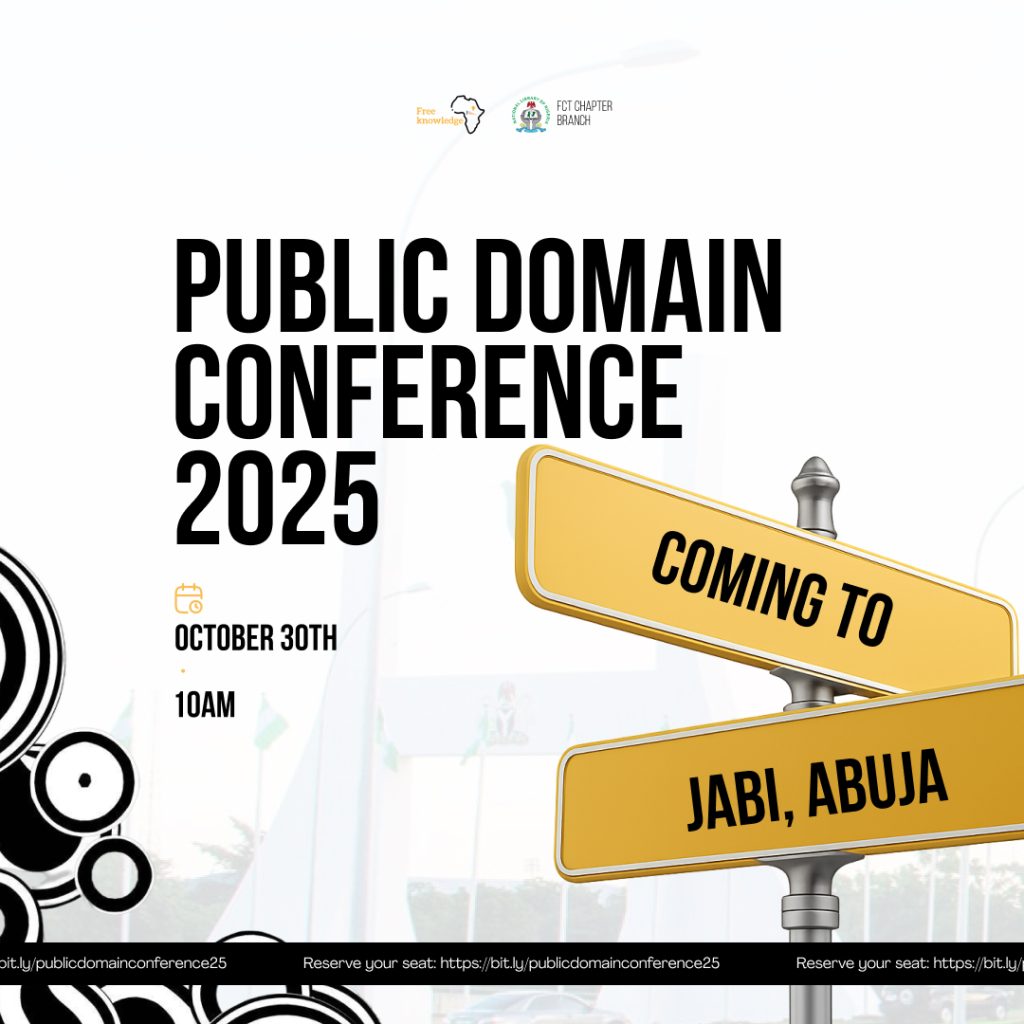
The urgent need to digitize Nigeria’s physical archives, books, newspapers, and records brought together librarians, legal experts, historians, and creatives. The conference was held in collaboration with the National Library of Nigeria (FCT Branch) and featured key stakeholders from Free Knowledge Africa, Archivi.ng, the Nigerian Copyright Commission, and a keynote address by Dr. Oluwatobi Moody, Director of the WIPO Nigeria Office.
It was a moment of alignment across sectors, disciplines, and generations — around the future of Nigeria’s cultural heritage.
Growing Beyond Programs
Beyond events and training, 2025 was also a year of institutional growth and strategic alignment.
We:
- Appointed new members to the Free Knowledge Africa Board of Trustees
- Sponsored 20 individuals to attend the 2025 Wikimania Conference virtually.
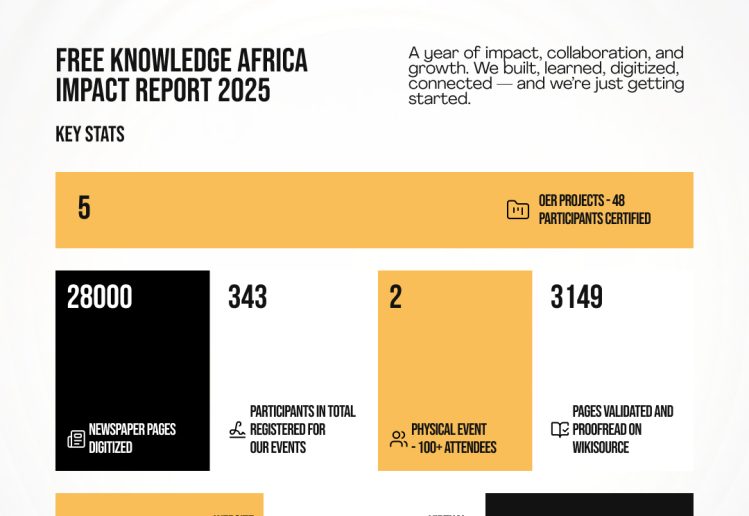
- Digitized over 2400 newspapers
- Signed the Open Heritage Statement, reaffirming our commitment to shared cultural preservation
- Took a major step in our institutional journey by registering Free Knowledge Africa as a Community Interest Company (CIC) in the UK
Each milestone strengthened the foundation on which our work stands.
Looking Back, Moving Forward
2025 was a year of conversations that mattered, skills that were shared, partnerships that deepened, and communities that showed up again and again.
We are deeply grateful to our community, partners, and supporters who continue to believe that knowledge should be free, accessible, and preserved for generations.
As we step into 2026, we carry not just plans, but purpose.
Thank you for being part of this journey with us.
We’ll see you in the new year.