In an era where information is the new currency, the accessibility of a nation’s history determines its future. The Public Domain Conference 2025 recently convened a powerful assembly of librarians, legal experts, historians, and creatives with a singular, unifying mission: to explore how Nigeria can democratize access to its vast cultural and educational resources.
Hosted in collaboration with the National Library of Nigeria (FCT Branch), the event served as a critical dialogue on the intersection of law, technology, and heritage. From the nuances of the Nigeria Copyright Act 2022 to the power of Open Educational Resources (OER), the conference charted a path toward a more inclusive, digital Nigeria.
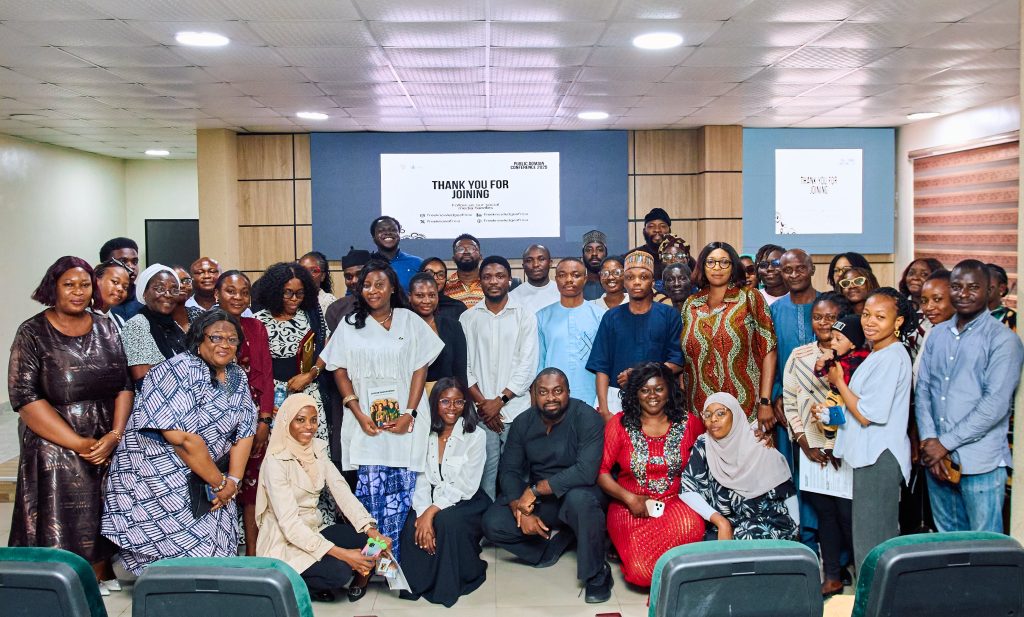
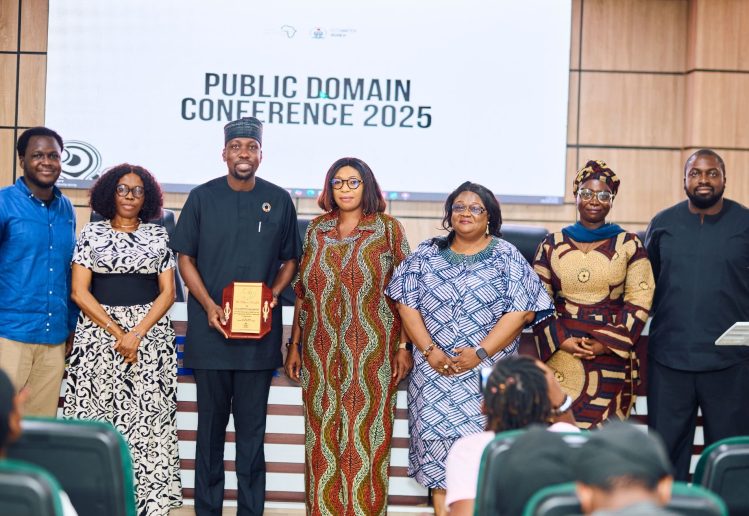
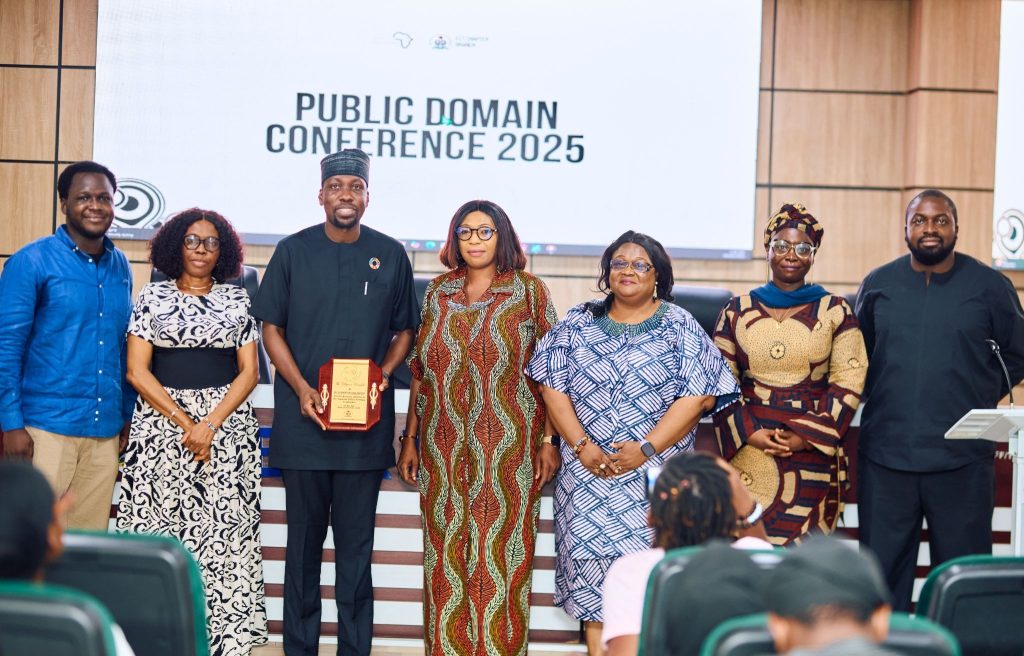
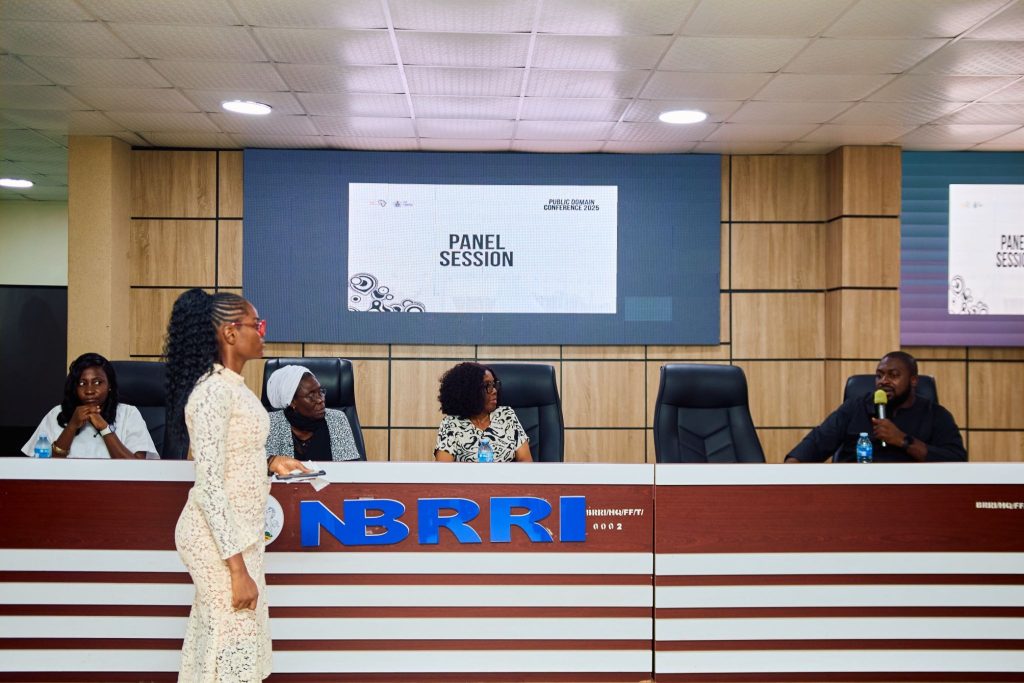
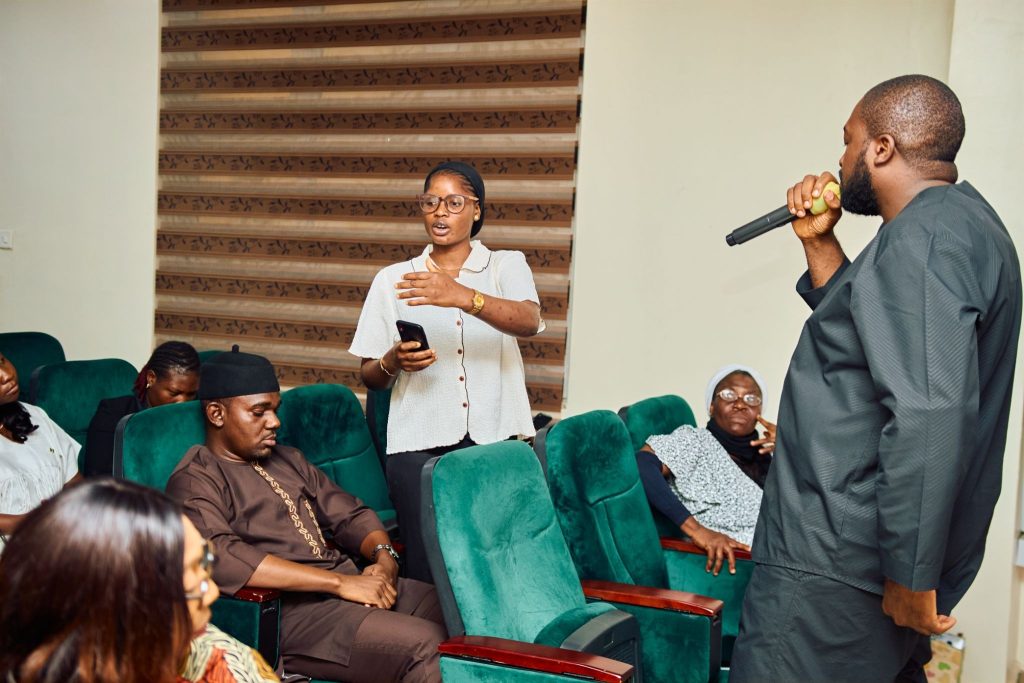
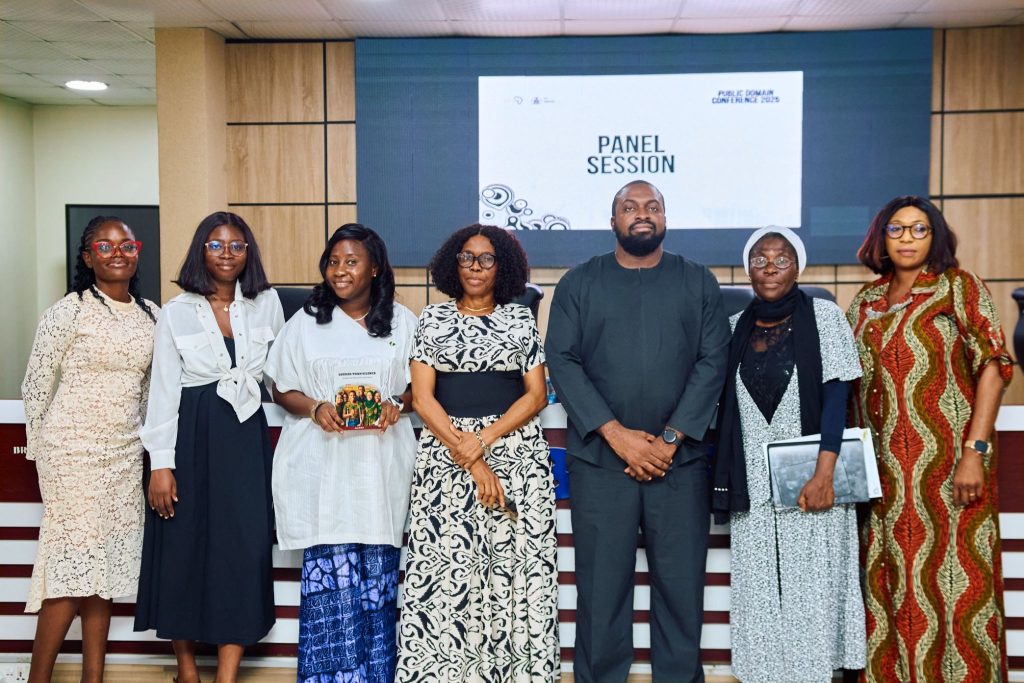
Attendees and speakers gathering at the Public Domain Conference 2025 in Nigeria
A Vision for an “Open Future”
The tone of the event was set immediately by the opening remarks. Àlàáfíàbámí Ọládipúpọ̀, Co-founder of Free Knowledge Africa, delivered the first welcome address, emphasizing the organization’s commitment to bridging the knowledge gap.
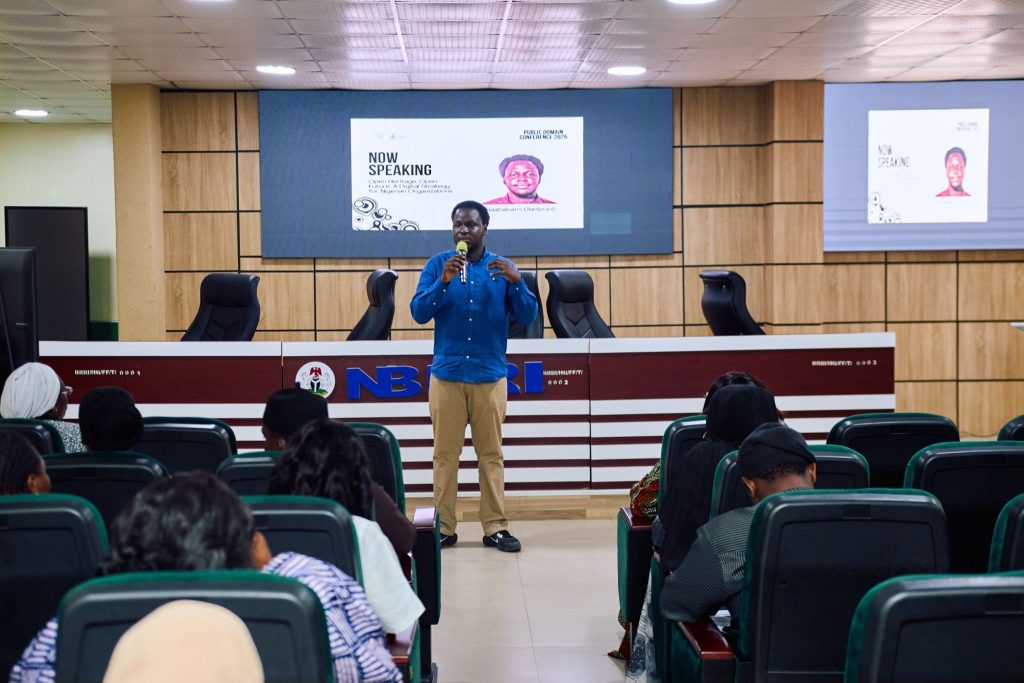
Àlàáfíàbámí Ọládipúpọ̀ of Free Knowledge Africa delivering the welcome address
Following him, Mrs. Oye of the National Library of Nigeria delivered a stirring second address that anchored the day’s discussions in the concept of an “Open Future.” She passionately argued that Nigeria’s rich collections—spanning ancient manuscripts, colonial-era newspapers, indigenous music, and art—are not merely static objects; they are national treasures that belong to the people.
“Digitizing these assets and placing them online means any Nigerian—or global researcher—can access them and build upon our shared heritage.” — Mrs. Oye
She highlighted that this vision goes beyond theory. Citing recent studies, she noted that digitalization is the most effective method for preserving cultural heritage for future generations. An “information ecosystem” built on these principles promotes inclusivity, transparency, and creativity across Nigeria’s entire knowledge sector.
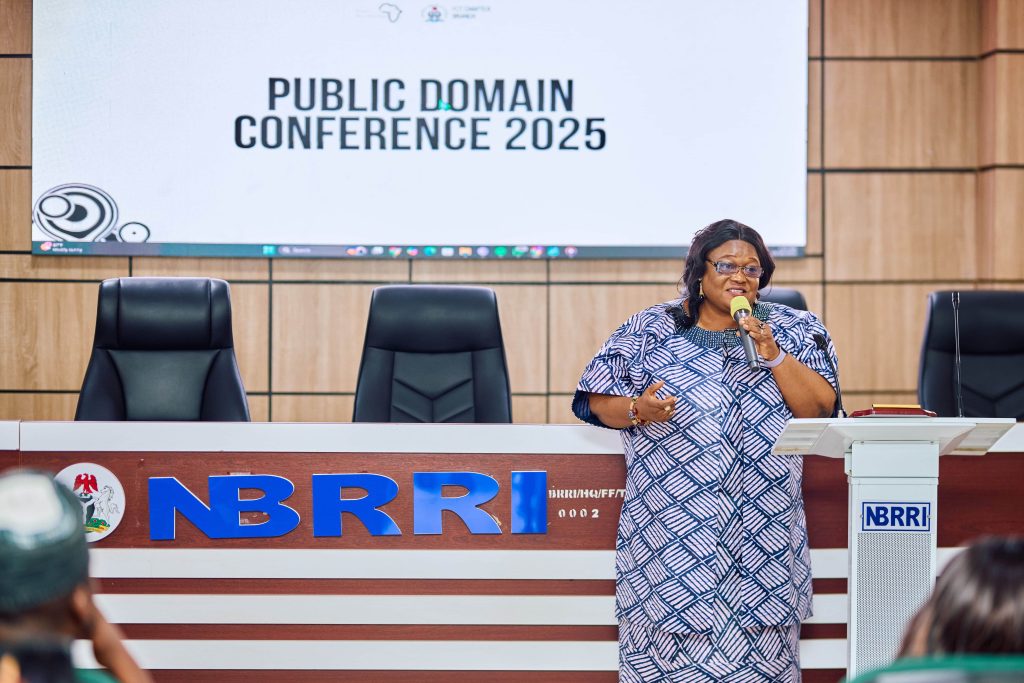
Mrs. Oye of the National Library of Nigeria delivering the welcome address/
One of the most significant barriers to digitization has historically been the fear of copyright infringement. However, Mrs Victory Babalola, the representative of the Director General of the Nigeria Copyright Commission (NCC) brought refreshing news to the stakeholders.
She stressed that the Nigeria Copyright Act (2022) is a game-changer. It seeks a delicate balance: rewarding creators for their labour while simultaneously expanding public access to knowledge. The Act’s objectives explicitly mention providing “appropriate limitations and exceptions to guarantee access to creative works.”
Key Provisions for GLAMs (Galleries, Libraries, Archives, and Museums)
The NCC DG representatives detailed how the new law empowers institutions:
- Section 25: Allows libraries, archives, and museums to make copies of works for preservation and public lending without needing explicit permission.
- Section 26: Permits the reproduction of works for people with print disabilities, ensuring inclusivity.
- Contract Nullification: The law invalidates any contract terms that attempt to override these exceptions.
This legislative progress means that schools and GLAM institutions can now confidently digitize and distribute materials for educational and preservation purposes. The call to action was clear: Educators, librarians, and technologists must raise awareness of these exceptions to fuel innovation.
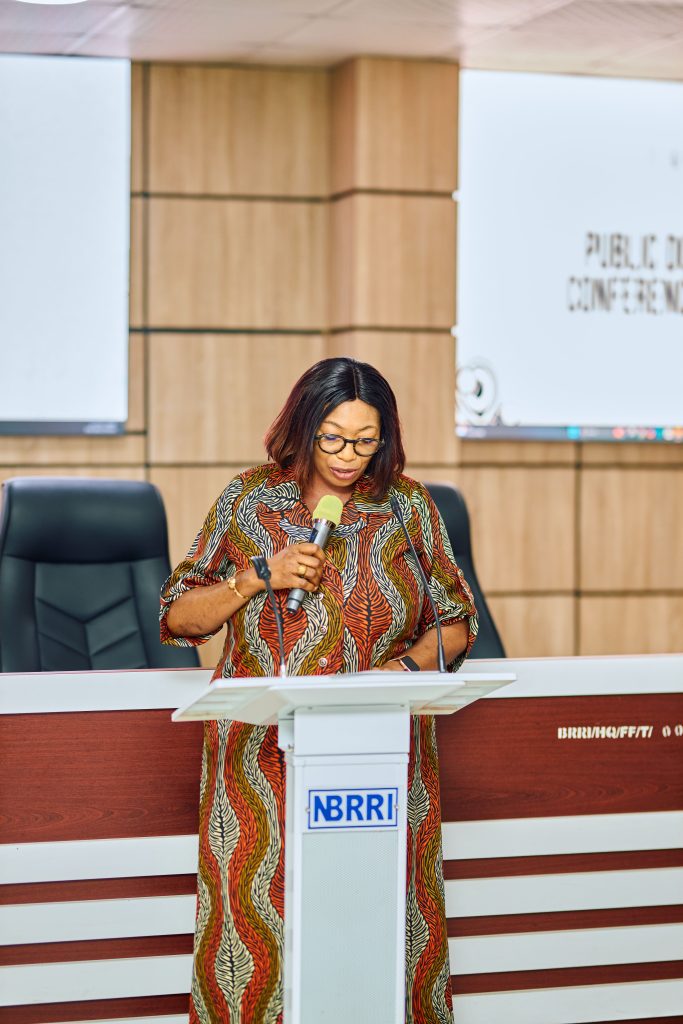
Mrs Victoria Babalola, representing the DG of the Nigerian Copyright Commission, addressing the Audience
The Philosophy of the Public Domain
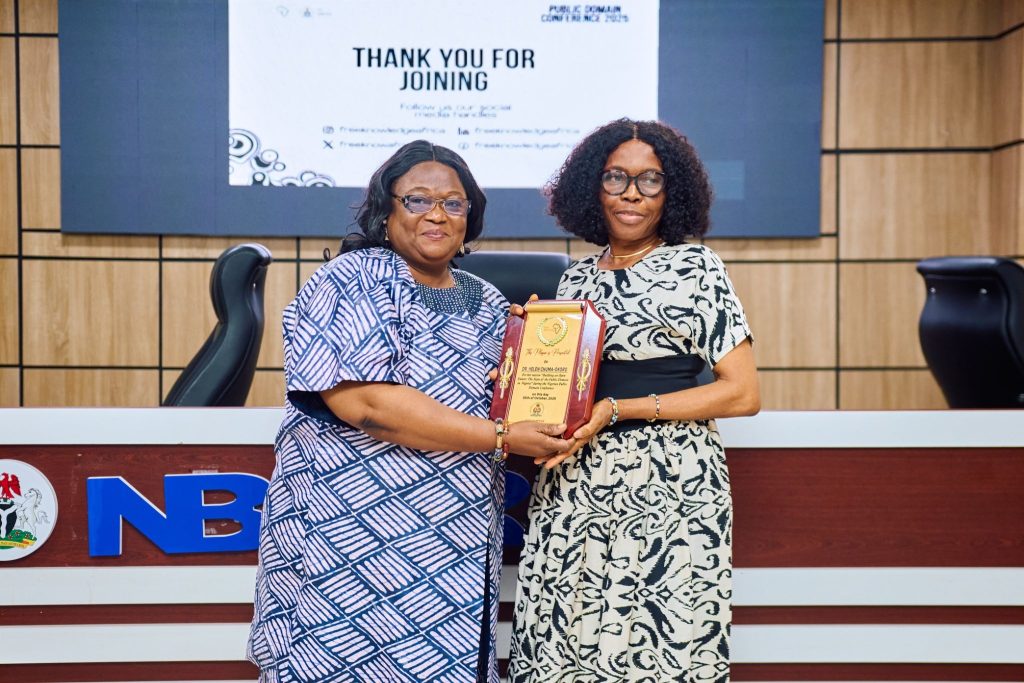
Dr Helen Chuma-Okoro, from the Nigerian Institute of Advanced Legal Studies (NIALS) took the stage to provide the philosophical and policy context of the public domain. Her presentation was a deep dive into why “information wants to be free.”
Dr Helen argued that knowledge loses its vitality when hoarded. It seeks expression, circulation, and regeneration. She explained that the Public Domain is not an accident of history but a construct of law designed to ensure society retains a shared reservoir of knowledge.
“No creator builds from nothing—every new work emerges from an older foundation. Without access to past works, creativity stagnates and innovation suffers.”
She also highlighted Nigeria’s growing commitment to openness through various policy frameworks:
- National OER Policy (2017)
- National Open Data Policy (2019)
- National Data Strategy (2022)
- Open-access mandates in Nigerian Universities.
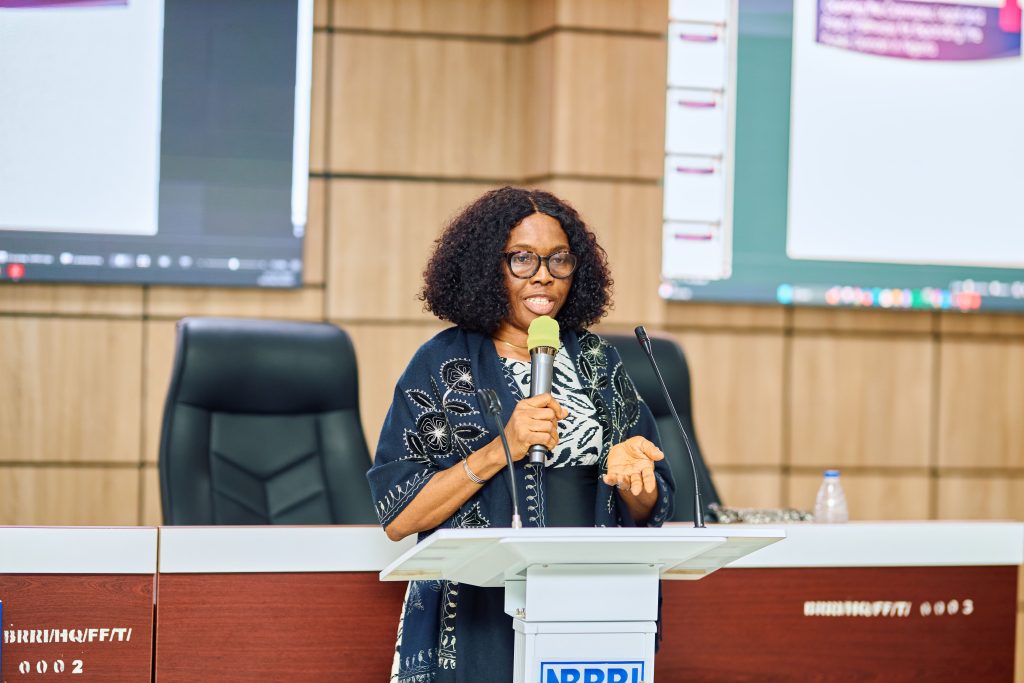
Dr. Helen Chuma-Okoro discussing legal frameworks and open access
Balancing Intellectual Property and Indigenous Knowledge
A critical nuance was introduced by Dr Oluwatobi Moody, Director at WIPO (World Intellectual Property Organization). He examined the tension between standard Intellectual Property (IP) laws and Indigenous Knowledge.
Unlike a novel or a pop song, cultural knowledge often lacks a single author or an expiration date—it is owned by the community. While international law traditionally treated this as public domain, Dr. Moody explained that Indigenous peoples are increasingly asserting their rights to control their heritage, citing the UN Declaration on the Rights of Indigenous Peoples (UNDRIP).
However, Dr Moody offered a warning:
- The Risk: Carving too many new “rights” into heritage could shrink the public domain.
- The Consensus: The public domain is not a “get-out-of-jail-free card” to exploit traditional knowledge, but Nigeria must find a balance. We must protect community-controlled knowledge while ensuring general cultural heritage remains open for education.
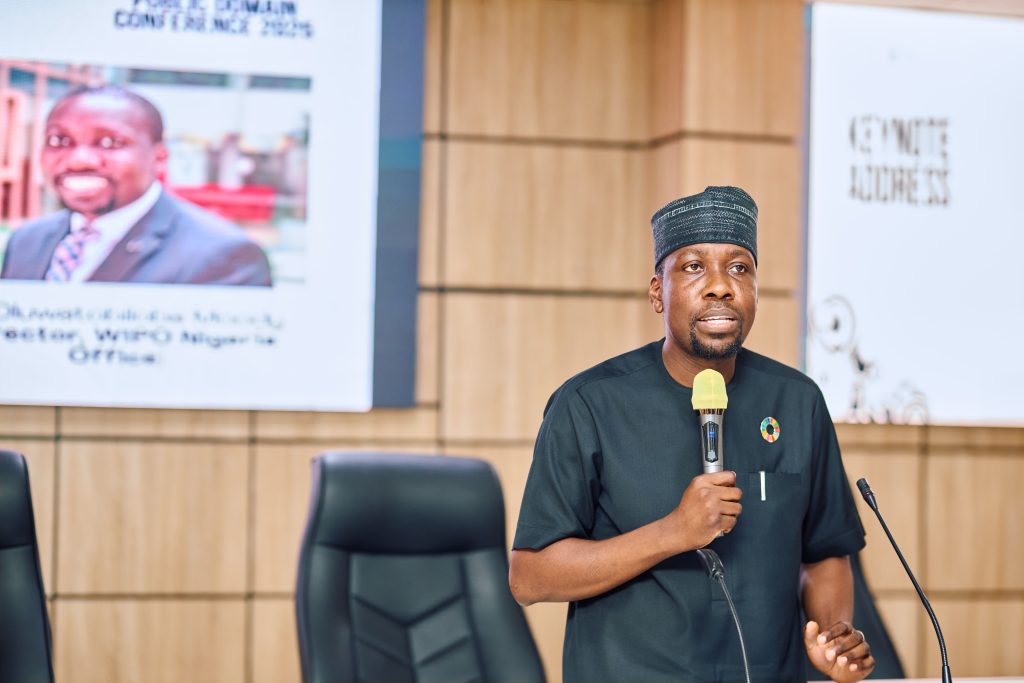
Dr. Oluwatobi Moody of WIPO is addressing the audience
Innovation in Action: The OER Showcase
Moving from policy to practice, the conference showcased the work of Aderonke Abdul, an education specialist and participant in the recent OER cohort. With funding received from the program, she developed an Open Educational Resource (OER) focused on oral and digital storytelling for multilingual literacy.
Aderonke shared a personal narrative, recalling how childhood films like Kotouai and local folktales shaped her identity. She argued that these intangible morals and worldviews must be preserved.
Her project bridges the gap between the past and the future. By combining oral storytelling with digital technology, she is empowering Nigerian youth to engage creatively with their traditions, ensuring that local stories and languages live on in the digital age.

Aderonke presenting her Open Educational Resource project on storytelling
The Urgency of Digitization: “Practice Precedes Policy”
The final session, led by Fu’ad Laqqal, addressed a pressing modern challenge: The representation of Nigeria in Artificial Intelligence.
Fu’ad highlighted a frustration shared by many: when we ask Large Language Models (LLMs) or search engines about Nigerian history, the answers are often incomplete, hallucinated, or entirely missing. Why? Because the underlying data—our books, newspapers, and archives—is not online.
Fuad, noting the “Bestie” relationship between Archivi.ng and Free Knowledge Africa, emphasized a crucial realization:
“Nigeria cannot wait for government systems to become perfect before digitizing its heritage. Practice must precede policy.”
He urged communities and civil society to start the work immediately. Digitization is not optional; it is the only way to ensure Nigeria’s political history, journalism, and intellectual heritage are not replaced by inaccurate narratives written by outsiders.
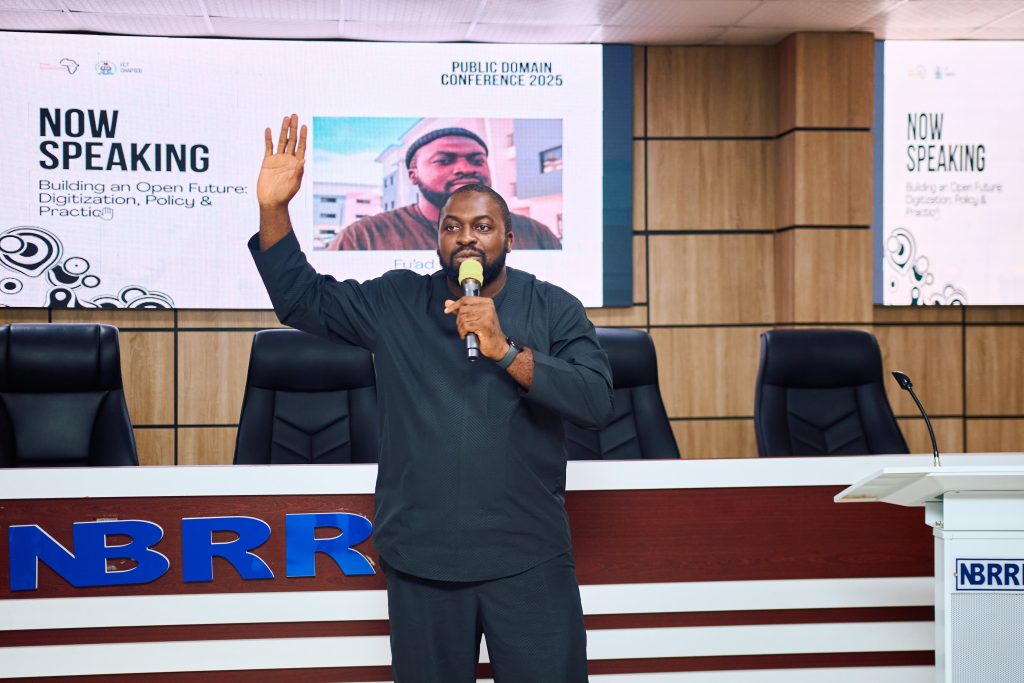
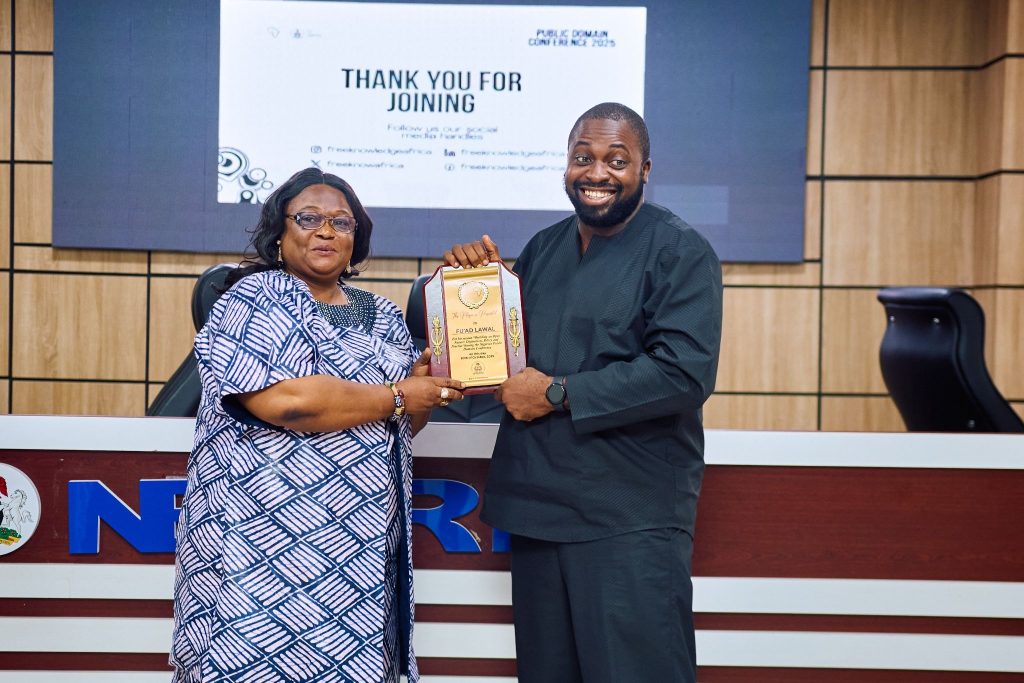
Fu’ad Lawal discussing the urgency of digitizing Nigerian history
Key Takeaways: The Road Ahead
The Public Domain Conference 2025 concluded with a clear set of action points for all stakeholders to keep Nigeria’s public domain vibrant:
- Promote Copyright Literacy: We must teach librarians, teachers, and students how to use copyright exceptions and Creative Commons licenses. Nigerians need to familiarize themselves with IP law to share and reuse works responsibly.
- Digitize and Share: Libraries, archives, and museums must prioritize scanning historical works and releasing them with open licenses. As noted, digital archives are the bedrock of cultural preservation.
- Leverage Open Metadata: Using crowdsourcing and volunteer tagging can accelerate the process of making Nigeria’s history discoverable online.
- Empower Community-Led Projects: We need to support more initiatives like Deronke’s storytelling course. Encouraging multimedia archives and public history projects keeps culture “living” and participatory.
Conclusion
The Public Domain Conference 2025 was more than an event; it was a call to arms for the custodians of Nigerian culture. By leveraging the Nigeria Copyright Act 2022, embracing Open Access, and committing to digitization, we can ensure that Nigeria’s rich past becomes a shared national asset rather than a locked vault. Please watch the Sessions in this playlist, highlight videos and view photos.
Are you ready to join the movement? Follow and join Free Knowledge Africa’s GLAM community to learn how you can contribute to the open future.